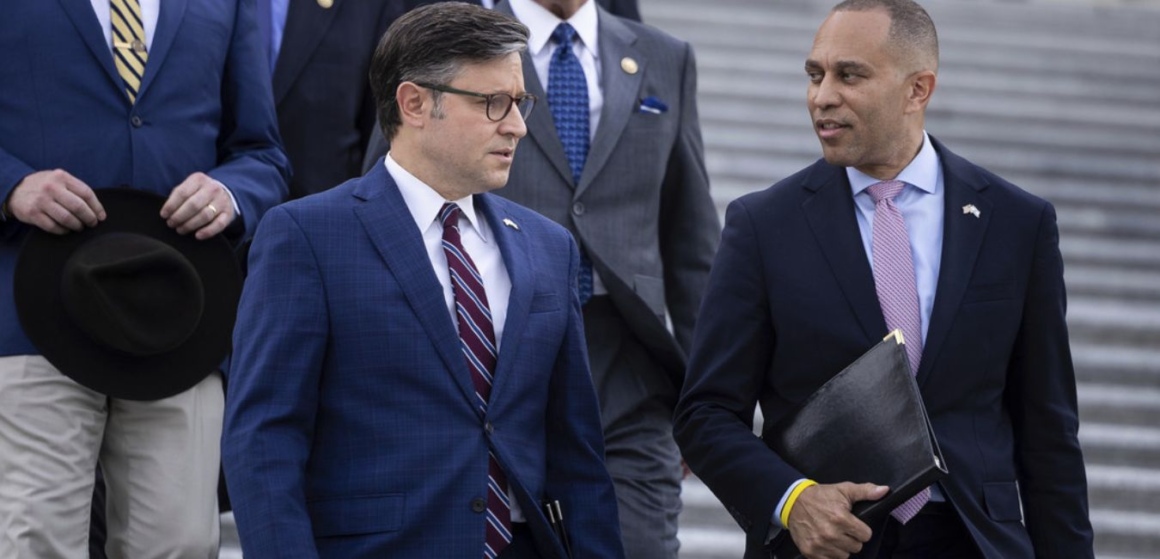
For a brief moment, it looked like Washington might turn a page. Two men from opposite parties — Mike Johnson and Hakeem Jeffries — were finding common ground in a city where that rarely happens. They prayed together, talked about family, and promised to keep their disagreements respectful.
Those early days carried a quiet optimism. Both fathers and men of faith, Johnson and Jeffries saw themselves as proof that civility could survive in the House of Representatives. Their bond, rooted in shared service on the Judiciary Committee, even helped Johnson weather internal party struggles. At one point, Jeffries personally helped him keep his job.
But that sense of partnership didn’t last.
A year later, the tone could not be more different. Trump has returned to power, Republicans control Washington, and a grinding government shutdown has pushed the Capitol to the edge. What was once a respectful alliance has fractured into bitter public combat — a casualty of Trump-era politics and the deepening culture of confrontation.
The breakdown hasn’t been subtle. “I think Chuck Schumer and Hakeem Jeffries are irredeemable at this point,” Johnson said on October 29 when asked about the shutdown. The next day, Jeffries delivered a cutting reply: “Republicans hold press conferences every day, and you know what they do? They lie to the American people. These people are stone-cold extremist liars, starting from the very top.”
It wasn’t always this way. The two men had once pledged to avoid personal attacks. But as the shutdown drags on, both leaders have turned to sharp rhetoric to energize their bases — and assign blame.
Things became even more personal after Jeffries faced a death threat from a pardoned Capitol rioter. “I spoke to him briefly this week, but he had nothing to say about the death threats. And you know, that’s irredeemable,” Jeffries told reporters. Johnson, who condemned the threat publicly, had said days earlier, “Anybody who threatens to kill any political official, we denounce it absolutely.”
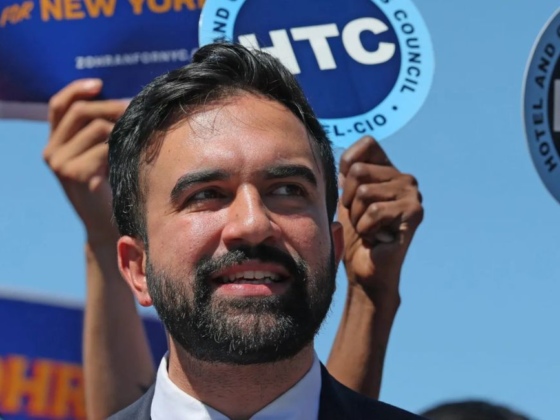
Since then, the tension has only escalated. Jeffries accused Trump and Johnson of running a “pedophile protection program” for failing to vote on releasing Jeffrey Epstein case files. Johnson fired back, calling Jeffries “apparently a socialist” for endorsing Zohran Mamdani for New York City mayor.
Jeffries dismissed the attacks, saying, “The unhinged and personal attacks coming from the other side of the aisle are a sign of desperation.” He added, “That said, I don’t take the baseless ad hominem attacks personally because we’re focused on lowering the high cost of living and addressing the devastating Republican healthcare crisis.”
Johnson’s office has tried to project calm, claiming the two still have “a productive working relationship based on mutual respect and trust.” A spokesperson said Johnson “considers the Leader a friend” and “has always encouraged his colleagues on both sides of the aisle to treat one another as fellow Americans.”
But that narrative doesn’t square with what lawmakers are seeing. “I think it is fractured,” said Rep. Tim Burchett, a Republican. Democrat Jared Huffman agreed: “There’s just no more goodwill. He’s burned it.”
The turning point, several Democrats say, came in December 2024, shortly after Trump’s election win. They accuse Johnson of bowing to Trump and Elon Musk by allowing partisan measures to slip into key bills, including the National Defense Authorization Act. “All of us felt burned in December,” Huffman said.
By now, many in Congress believe Trump calls the shots. “The president is doing all the negotiating,” admitted one Republican lawmaker. Jeffries and Senate Minority Leader Chuck Schumer have asked to meet with Trump directly, arguing that “Mike Johnson and John Thune have zero authority to act on their own.”
The shutdown has only deepened the divide. Democrats say Johnson failed to provide a spending framework, making bipartisan negotiations nearly impossible. Republicans counter that Democrats have refused to cooperate to keep the government open. Meanwhile, millions of Americans are feeling the impact of halted programs and unpaid federal workers.
Inside the Democratic caucus, Jeffries’ tone has hardened. Lawmakers say that where he once urged patience with Johnson — telling colleagues to “give him a chance” — he now speaks far more critically. “When Johnson came in, it was a fresh start,” said one House Democrat. “Everyone wasn’t in agreement, but they were coordinated on things. But that has pretty much eroded at this point.”
There have been small flashes of bipartisanship. The two leaders have quietly cooperated on increasing security for lawmakers and helping Johnson fend off far-right censure resolutions that threatened to consume the House. But those gestures have done little to rebuild the trust that once defined their working relationship.
Trump’s influence looms over it all. His power has shifted the center of gravity in Washington, leaving even senior leaders like Johnson and Jeffries struggling to chart their own course. What began as a rare friendship has become another casualty of the Trump era’s zero-sum politics.
“They’re powerful, principled men with real disagreements,” said a source familiar with both. “But the device that has been inserted here is the president.”
Once a story of faith, family, and unlikely friendship, the Johnson–Jeffries relationship now mirrors the nation’s divide — two men who wanted to rise above the fray, pulled back down by the very forces they hoped to overcome. As one insider put it, their bond isn’t broken beyond repair — at least not yet. It’s simply, and perhaps inevitably, “complicated.”