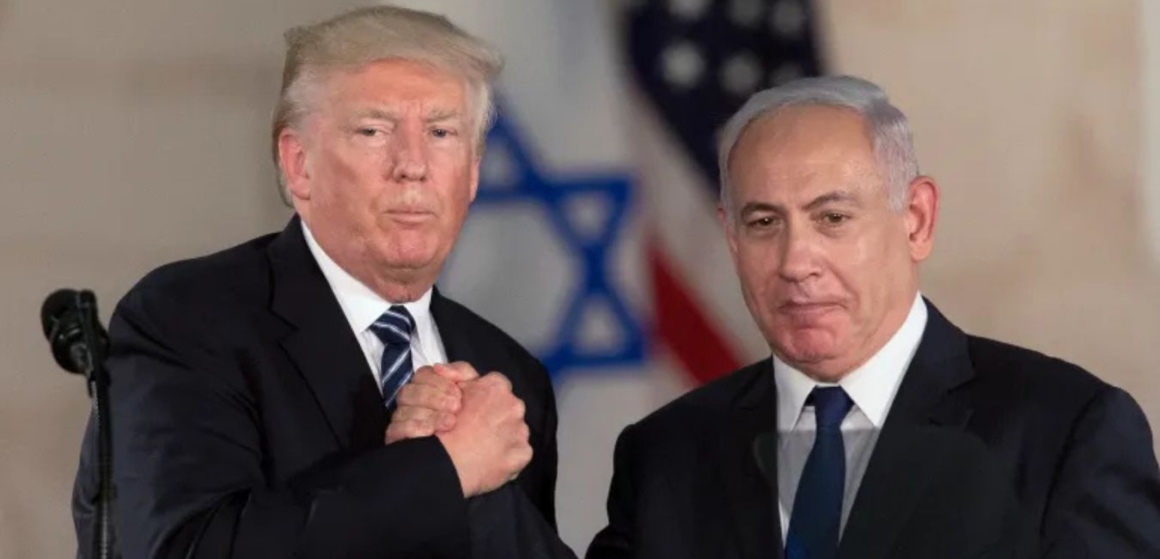
Israeli Prime Minister Benjamin Netanyahu is set to meet President Donald Trump at the White House on Monday, amid a Middle East dramatically reshaped since the Hamas attacks of October 7, 2023. The region, and Netanyahu himself, have changed in ways that make the upcoming discussions both delicate and unpredictable.
The U.S. president has indicated optimism about a potential deal to end the Gaza conflict, but for Netanyahu, the political stakes are high. The prime minister’s new approach to warfare—markedly different from his earlier cautious strategies—has already stirred debate within Israel and abroad.
For much of his career, Netanyahu favored limited, controlled military operations. Campaigns like Operation Pillar of Defense in 2012 lasted just over a week, reflecting a strategic preference for caution. Yet after the October 7 attacks, in which over 1,200 Israelis were killed, Netanyahu vowed to transform Israel’s regional posture.
“We are going to change the Middle East,” Netanyahu told the public, signaling a departure from his previous restraint.
Since then, Israel has carried out high-risk operations against Hamas, Hezbollah, Iranian-backed militias, and even Syrian forces. Netanyahu boasted at the United Nations General Assembly last week:
“We’ve hammered the Houthis. We crushed the bulk of Hamas’s terror machine, we crippled Hezbollah, taking out most of its leaders and much of its weapons arsenal, we destroyed Assad’s armaments in Syria, we deterred Iran’s Shiite militias in Iraq, and most importantly and above everything else, we devastated Iran’s atomic weapons and ballistic missile programs.”
This marks a dramatic shift from Netanyahu’s prior style. Analysts who once expected measured responses now see a prime minister willing to take decisive—and controversial—risks. Maj Gen Eyal Zamir, chief of staff of the Israel Defense Forces, reportedly opposed the latest Gaza City operation targeting Hamas leadership in Qatar, yet Netanyahu pressed on.
Mazal Mualem, author of The Netanyahu Code, describes the prime minister as “a totally different person, who has undergone an internal evolution, replacing his risk-averse tendencies with a much more proactive and adventurous security approach.” She adds, “The security collapse on October 7 served as a wake-up call. He was caught in strategic blindness, and the lesson he drew was that he must act independently of the security establishment.”
Despite these bold moves, Netanyahu remains constrained by fear—fear of losing political control, fear of his far-right coalition partners, and fear of the ongoing corruption trial. Anshel Pfeffer, Israel correspondent for The Economist, notes:
“Netanyahu has always been extremely risk-averse. He fears change and clings to the status quo. Even now, the Gaza war forced him to adapt. He’s still addicted to the status quo—only now the status quo is war.”
This “desperate gambler” mentality, as Pfeffer calls it, is compounded by pressures from coalition members Itamar Ben Gvir and Bezalel Smotrich, who oppose negotiations with Hamas and insist on permanent occupation of Gaza. Trump’s proposals recognizing Palestinian statehood clash directly with their agenda, putting Netanyahu in a delicate position.
While Israel’s military operations may have restored some deterrence, they have not produced the decisive outcomes Netanyahu seeks. Public support for the war has waned, and international legitimacy has been challenged, particularly as recognition of Palestinian statehood grows.
The Trump administration has offered support but with unpredictable limits. In June, Trump backed Israeli strikes on Iran, only to order a halt to ongoing operations days later. His recent optimistic remarks about a possible Gaza deal may indicate pressure on Netanyahu to accept a new status quo—potentially forcing the prime minister to scale back his military ambitions and confront political realities.
Netanyahu’s transformation—from cautious administrator to high-stakes risk-taker—is real, yet incomplete. Whether driven by strategic evolution, personal ambition, or survival instincts, it remains to be seen how he will navigate the meeting with Trump, whose own unpredictability in foreign policy adds another layer of complexity.
“From the start of the war through the most recent decisions, including Iran and Qatar, at every one of these stages there were always people in the room who opposed, hesitated, or raised reservations of one kind or another,” Netanyahu said. “And that is perfectly fine… but in the end, the one who decides is the cabinet.”
As Netanyahu faces Trump, the world watches to see if the prime minister’s bold new approach will yield the outcomes he hopes for—or if the lessons of October 7 will remain an unfinished chapter in his storied career.